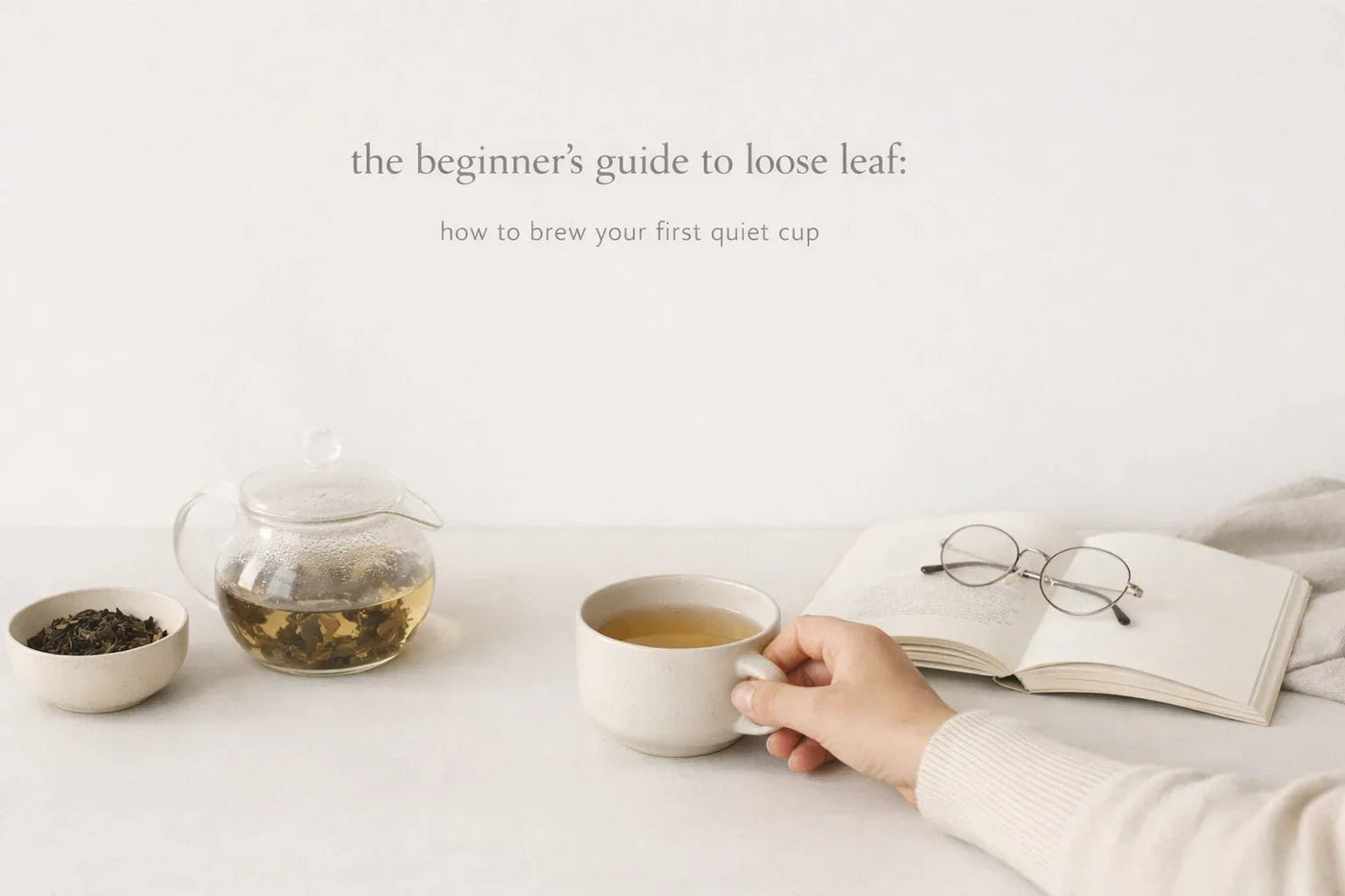
Brewing loose leaf tea isn't complicated. It just looks that way from the outside.
There are no secret techniques or years of training required. You need tea, water, something to hold both, and a few minutes to let them meet. The rest is just permission to slow down.
This guide is for anyone who's curious about loose leaf but hasn't started yet. Maybe you've always used bags. Maybe the process feels fussy or unnecessary. Maybe you just want to know what all the quiet fuss is about.
We'll keep this simple. No jargon. No pretense. Just the essentials you need to brew your first cup.
what you actually need
Before you worry about teapots or temperature gauges, start here. These four things are enough.
Tea leaves. Loose leaf, not powdered or broken into dust. Whole leaves hold more flavor and can usually be steeped more than once.
Water. Clean, filtered water if possible. Tea is mostly water, so quality matters more than you'd think.
A vessel. A mug, a cup, a teapot. Something heat-safe to hold the water.
A way to strain. A simple mesh infuser, a small strainer, even a French press. Anything that keeps the leaves separate from what you're drinking.
That's it. You don't need a ceremony. You don't need specialty equipment. You just need these four things and a few quiet minutes.

the steps
Brewing loose leaf follows a pattern. Once you've done it a few times, it becomes automatic. Until then, these steps will guide you through.
1. measure your tea
Use about one teaspoon of loose leaf per eight ounces of water. If your leaves are large and fluffy, you might need a bit more. If they're dense and tightly rolled, a bit less. But one teaspoon is a reliable starting point.
You're not aiming for precision here. You're aiming for a ratio that works. Over time, you'll adjust to taste.
2. heat your water
Different teas need different temperatures. This isn't about being fussy. It's about not burning delicate leaves or leaving robust ones underextracted.
Here's what works:
Green and white teas: 175–185°F (80–85°C). If you don't have a thermometer, bring water to a boil, then wait about a minute before pouring.
Oolong teas: 185–205°F (85–96°C). Somewhere between green and black. Wait 30–45 seconds after boiling.
Black teas and herbal blends: 212°F (100°C). Full boiling water.
If you're starting out and don't want to overthink it, use this shortcut: black and herbal get boiling water; everything else gets water that's cooled slightly after boiling.
3. steep your tea
Pour the hot water over your leaves. Set a timer. Walk away if you need to.
Steeping times matter more than you'd expect. Too short and the flavor won't develop. Too long and bitterness takes over. Here's where to start:
- Green tea: 2–3 minutes
- White tea: 2–3 minutes
- Oolong tea: 3–4 minutes
- Black tea: 3–5 minutes
- Herbal tea: 5–7 minutes
That three to five minutes is just enough time to read a few pages. To sit with a thought. To let the day settle slightly.
When the timer goes off, remove the leaves. Leaving them in the water keeps extracting, and extraction past a certain point turns bitter.

4. taste and adjust
Your first cup might not be perfect. That's fine. It's still yours.
If it's too weak, use more tea or steep longer next time. If it's too strong or bitter, use less tea or steep for less time. If it tastes flat, check your water quality.
Brewing loose leaf isn't about following rules exactly. It's about learning what you like and making small adjustments until you get there.
why this matters
There's research behind the ritual of tea. Studies show that intentional routines, especially ones that engage the senses, help reduce anxiety and improve focus. Psychology Today notes that tea rituals create predictable moments of calm in otherwise unpredictable days.
But you don't need a study to tell you that slowing down feels good.
Brewing loose leaf forces a pause. You can't rush it. You can't microwave it. You have to wait while the leaves open and release what they've been holding. And in that waiting, something shifts.
Numitea's guide on tea and mindfulness describes it this way: "The act of preparing tea, measuring, pouring, steeping, brings us into the present moment. It's a form of active meditation that doesn't require sitting still or clearing your mind. You're just here, with the tea, watching it become what it's meant to be."
That's the quiet part no one mentions. Loose leaf isn't better because it's fancy or superior. It's better because it asks you to be present for a few minutes. And most days, that's exactly what we need.

common questions from new brewers
Can I reuse the leaves?
Yes. Many loose leaf teas: especially oolong, white, and high-quality green teas: can be steeped two or three times. Each steep tastes slightly different as different compounds release. Just use hotter water and slightly longer times for the second and third steeps.
What if I don't have an infuser?
You can brew the tea directly in your cup and strain it through a small mesh strainer when you pour. Or brew in a French press. Or even let the leaves settle at the bottom and drink carefully around them. The method matters less than you think.
How do I store loose leaf tea?
Keep it in an airtight container, away from light, heat, and strong smells. A cupboard works fine. Loose leaf doesn't expire quickly, but it does lose vibrancy over time. Use it within six months to a year for best flavor.
Why does my tea taste bitter?
Usually because the water was too hot or the steeping time was too long. Lower the temperature or shorten the time. Sometimes it's the tea itself: lower quality leaves can taste harsh no matter what you do.
where to go from here
Start with one type of tea. Brew it a few times until you understand how it behaves. Then try another.
You'll start noticing differences. How black tea opens differently than green. How herbal blends need more time. How oolong changes from steep to steep.
This isn't about becoming an expert. It's about building a small ritual that fits into your day. Something steady. Something yours.
The first cup won't be perfect. The tenth might not be either. But somewhere along the way, you'll brew something that tastes exactly right, and you'll realize you weren't really learning about tea at all.
You were learning about paying attention.
sources
- Art of Tea: Recommended Steep Times : Comprehensive guide to brewing temperatures and steeping times for different tea varieties
- Psychology Today: Taking Time for Tea: Comforting Rituals in Stressful Times : Research on the psychological benefits of tea rituals
- Numitea: Tea and Mindfulness: How a Simple Cup of Tea Can Enhance Your Well-Being : Guide to mindfulness practices in tea preparation